memory. language, art. wittgenstein. books. ceramics.

all sorts of thinkings on memory, language, art, wittgenstein, books, etc, while I am getting on with my MA
Showing posts with label identity. Show all posts

Sunday, 8 May 2011

The Lives of Other's: Miroslav Tichy @ Wilkinson Gallery


Miroslav Tichy's work is shown at Wilkinson Gallery at the moment. (Press release here)

1. Being John Malkovich.  It is disturbing, how close one gets to "being Miroslav Tichy" when walking the show. Apparently, Tichy photographed those images for himself. Thus the honesty of voyeuristic experience in them. The images look like stolen moments, quick ones, where there is no time to set up the camera. Just the moment. A glimpse of nudity. A glimpse of smile. A glimpse of a shoe.
The photos do not look precious - one could find them on the basement floor, gnawed by mice, flooded, marked with age and surroundings. A discarded collection. One of those albums or photo boxes I get from house clearances.
2. Would one photo be enough? No. This show is a book - one page does not make a book ( I do know somebody who would most certainly ague otherwise :-) The images flow from one into another and build up a the whole. Page by page, photo by photo, around the perimeter of the gallery.
3. The Lives of Others is a wonderful German film about surveillance in East Germany.

Friday, 11 February 2011

Beyond photography: Clarisse d’Arcimoles @ Degree Art


At the moment Degree Art has got a fascinating exhibition by Clarisse d’Arcimoles. Worth a trip to the East End.
Clarisse is a photographer, but the exhibition was not exactly what I expected of a photography exhibition. It is not one of those perfectly lit, high gloss, expensively framed, large format selection of land/city/seascapes, that fill the art fairs. Clarisse's work is intimate and homely. She recreates and documents the past (no wonder I loved the show). There are photos from her family albums (a kind of now and then arrangements), there is the story of the last resident of the demolished block of flats, there are her travels in India. I had an impression, that Clarisse functions first as an artist, and then as a photographer. I will certainly be keeping my eye on her.

Since graduating from Central Saint Martin’s just over a year ago, d’Arcimoles’ work has been enthusiastically received with exhibitions and awards in the UK and internationally. She is currently exhibiting in Newspeak: British Art Now Vol. II at the Saatchi Gallery. Clarisse d’Arcimoles immortalises, revisits and re-imagines through her work, taking memory and the passage of time as her material. Through this conflation of the past and present the results fluctuate between emotionally charged relics and documentary objects. D’Arcimoles’ delicate handling of her subjects challenges authenticity and artificiality in a bid for both nostalgia and reality.

Clarisse d’Arcimoles: Un-Possible retour and other recent works will include new and recently acclaimed photography, film and installation by d’Arcimoles. Un-Possible retour is a photographic series in which the artist reconstructed snapshots from her family photo albums. The works share the simultaneously poignant and comic atmosphere of The Good Old Days, a sustained investigation through notebooks, photography and film, into the life of Jimmy Watts, the oldest resident of the Market Estate in Holloway, demolished last year. The film will be shown in a reconstruction of how the artist displayed the film in Watts’ flat, custom-built for the exhibition. 16 impressions sous plastique is a collection of self-portraits of d’Arcimoles in a series of hostels and hotel rooms while travelling across India. The intimate environments are generic yet personal in their brief occupation, defined by the detritus of previous tenants or sterile anonymity, accompanied by unlikely commentary and recommendations. These celebrated works will be accompanied by new and previously unseen works.

Saturday, 29 January 2011

Burning books - no11; 1969


1969. Blank.

The number of books in young people's personal libraries increased 60 per cent. (from Illustrated History of the USSR)
So?


I am taking books, that no longer have the society that supports them (uh! I have got a barn full of them!) and I reduce them to an immensely fragile state (firing in the kiln) - so fragile, that they may disintegrate in hands - just like the memory of the times, that they represent.

Friday, 14 January 2011

Plates: forgetfullness after David Hume


Vintage plates to be fired with ceramic decals. The images come from my own MRI scan and personal photo albums.


I have an appalling memory. Each time I read an old book, it's joy and wonder all over again, like I have never seen it. I do wonder, what would I be like if I was not so forgetful.

"Had we no memory, we should never have any notion of that succession of perceptions which constitutes our self or person." David Hume


When I go to house clearances I am always attracted to the plates. Plates are common. Everybody has plates. They get used well. They are very personal: chintzy, white, retro, etc. They are laden with specks somebody else's life: a chip on the left, a mark on the ridge.

When I get these used plates, I have an urge to scrub them scrub them scrub them to rid them of the traces of their previous owners. Is that possible at all?


Wednesday, 12 January 2011

Deficit: loss of language, loss of identity, loss of memory

.


"Neurology's favorite word is "deficit", denoting an impairment or incapacity of neurological function: loss of speech, loss of language, loss of identity, loss of memory, loss of vision, loss of dexterity and a myriad other lacks and losses of specific functions or faculties." (from Oliver Sacks "The Man Who Mistook His Wife for a Hat")


Friday, 7 January 2011

Dangus per dieną verkia


Už ką gi žemė barė dangų,
Kad jis dabar per dieną verkia.
(I cannot remember the author)

Thursday, 6 January 2011

The face from the grave: vanishing pictures on the gravestones.


I have got a folder in my computer called THE GRAVES.

As I was recently looking into the whole idea of absence, I was becoming curious about those images on the gravestones. The vanishing or damaged images. Images that were meant to be there to preserve the face for the eternity.
When that picture is gone, one becomes really really dead, I thought. The name and the dates remain to describe what was once a person. Sounds like electoral register, doesn't it?

Tending the graves in 1970's


This is a great video I found on youtube. Tending the graves in 1970.

Friday, 10 December 2010

Porcelain airplanes.


Paper airplanes. In porcelain.

Headstones. Shatter. Gone.

As a late teenager I had a screensaver on my computer, that showed different ways to fold paper aircrafts. I do remember making one that actually flew.

Wednesday, 20 October 2010

Oscar Munoz: how to be political and metaphysical

I have only just come across Oscar Munoz. Prof. Catherene Ewes suggested him at the tutorial yesterday.
I find this work terribly alluring. The subject is sensitive. The performance is simple. It could be political and metaphysical at the same time.


In Columbian artist Oscar Muñoz’ “Re/trato,” a 2003 video projection that was displayed in the Latin American exhibition at the 2005 Venice Biennial, a hand repeatedly tries to paint a portrait on the concrete sidewalk. As soon as the brush finishes one part of the painting, the other part begins to disappear. The artist paints with water, and the hot sun evaporates the image before it is completed. The portrait can never be seen as a whole. This work uses an ethereal material--water--to address the transitory nature of human existence. Munoz also uses appearing and disappearing portraits in his artworks as a metaphor for the numerous people who have mysteriously disappeared in his native country.


Wednesday, 8 September 2010

My clouds


http://www.meteo.lt/ivair_debesys.php

Monday, 6 September 2010

______________________back


Back from the summer!

Every time I come from Lithuania, I bring thousands of photos of - what looks like - random places along the way. Random houses. Random cows. Random electricity poles in random fields. But only in Lithuania. Things that you will not find on the cover of the tourist guides.

Sunday, 4 July 2010

Keeping the whimsical alive


I had an conversation yesterday with somebody I do not know very well.

- So what do you do?
- I am am an artist, I suppose.
- Oh, a painter?
- No, I do all sorts of things: ceramics, printing, murals. But mainly books.
- Oh, an illustrator!
- A kind of fine art illustrator, I suppose.
- So do you make children's books?

Well, I don't, really. But the best work I have made is appealing to children and adults alike. However, recently I have been struggling to keep my whimsical side alive. Is it a sign that I have started taking my work too seriously?

My kids had the school fete on Saturday. The theme was: "Round the World". I did not have time work on their fancy dress costumes, so we had a brainstorming session and threw something together. As a result - they won. And the reason they won - as I see it - is because we did not take it seriously! The girl with the chop-sticks in her hair and the leopard with somebody's foot.

Oh, but God! Sometimes, it's really hard to keep the whimsical self alive!

Wednesday, 28 April 2010

Pteronarcophobia - fear of flies.

Musca domestica.

Flies are gross.
Every year they flock into the very highest corner of our white bedroom ceiling (on the farm) and form a black lump and hibernate there. Others hide in the walls, under the roof, in the window frames.
Then, in spring, as the weather warms up, they come out. Hundreds! Thousands of them! Millions and gazillions! They are sleepy. They drop on the floor and buzz there annoyingly. All surfaces get covered with them. I kept the hoover next to my bed for three nights. Aghhh!!


When the flies are awake and gone, these other ones start waking up. They are far less repulsive and less noisy. However, they do come out in hundreds, thousands, millions and gazillion
s as well. They flutter flutter at night: around your face, get trapped in your hair, drop on your pillow! Aghhh!!!
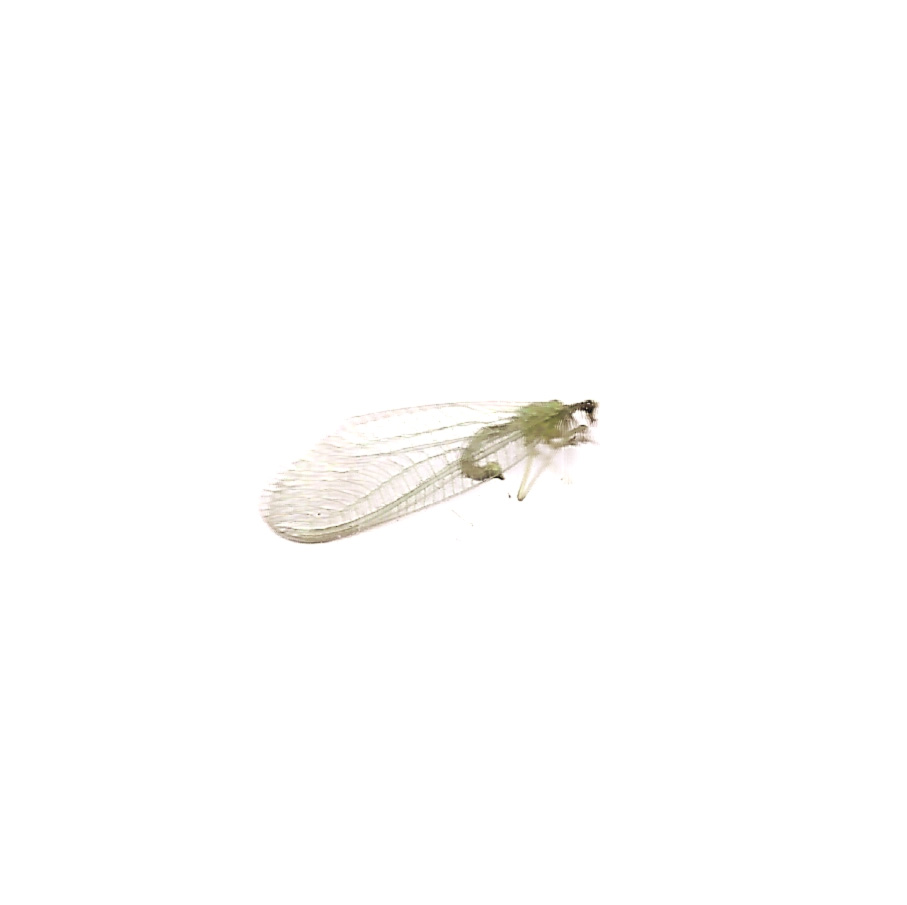
Unfortunately, I do not know what those insects are. I like knowing the names of the things, that share my space: birds, trees, reptiles, etc. This friend of mine said, they call them "fėjos" (fairies). What a beautiful name, I thought. Faea domestica?

As a result of this beautiful name, I went through a stage of fascination with them. The insects look
wonderfully translucent and ephemeral. When alive, their colours range from diaphanous pink and lilac, to lime greens and yellows.

Last year I made a few plates (as testers) with the "fairies" (I was working with "cosy musty grandma's home" imagery). This year, I will be trying to do something more interesting. Possibly involving the play of words.


Work in progress.


P.S.: 2001.05.04

I have finally found their name: Chrysopa. Lacewing. Like a flemish curtain or a crochet tablecloth. Or a veil covering the face of a bride or a widow. Auksaakė in Lithuanian. "Golden eyes". Something fairy tale. King's daughter under a spell. To fight a dragon.

Lacewings usually have bright green bodies, prominent, golden, metallic eyes and green veins on delicate, transparent wings. However some species are browner in colour.

There are 14 species of lacewing in the UK, although they are less common in Scotland. Both the adults and larvae are carnivorous and often feast on aphids. The larvae suck the aphids’ juices and may even use the drained bodies to hide under.

PPS Now this blog is related to Lepidopterophobia - fear of butterflies and Cluster Thoughts.


Sunday, 25 April 2010

About the little things.

Our holiday in Lithuania has been extended by the volcanic ash cloud. Hurrah!
Unfortunately, a long holiday does not necessarily mean a productive one. I took a some photos and I did a bit of thinking. I was thinking (thinking!) of the small things that make my farm world what it is. They are little fragments of my place, my life - like two minutes out of a film. Six words out of a paragraph. Six paragraphs out of a book.